Home Remodeling Santa Clara | Kitchen, Bath and Home Renovations | Gadi Construction

Beautiful job updating the kitchen and shower. Our project manager, Eden was responsive and quickly moved the project along, completing everything in three weeks .

GADI did a great job updating our kitchen and shower.
Our project manager Eden was highly responsive, quickly understood exactly what we needed, and kept everything moving efficiently. The entire project was completed in just 3 weeks. Updating the kitchen included installing a new counter, a new sink, and a built-in dishwasher, and everything is beautiful and working well. They also painted the cabinet doors, greatly improving the look of the kitchen. For the bathroom, they removed a built-in bench, making the shower much more spacious, and beautifully replaced with new tiles, including the floor.

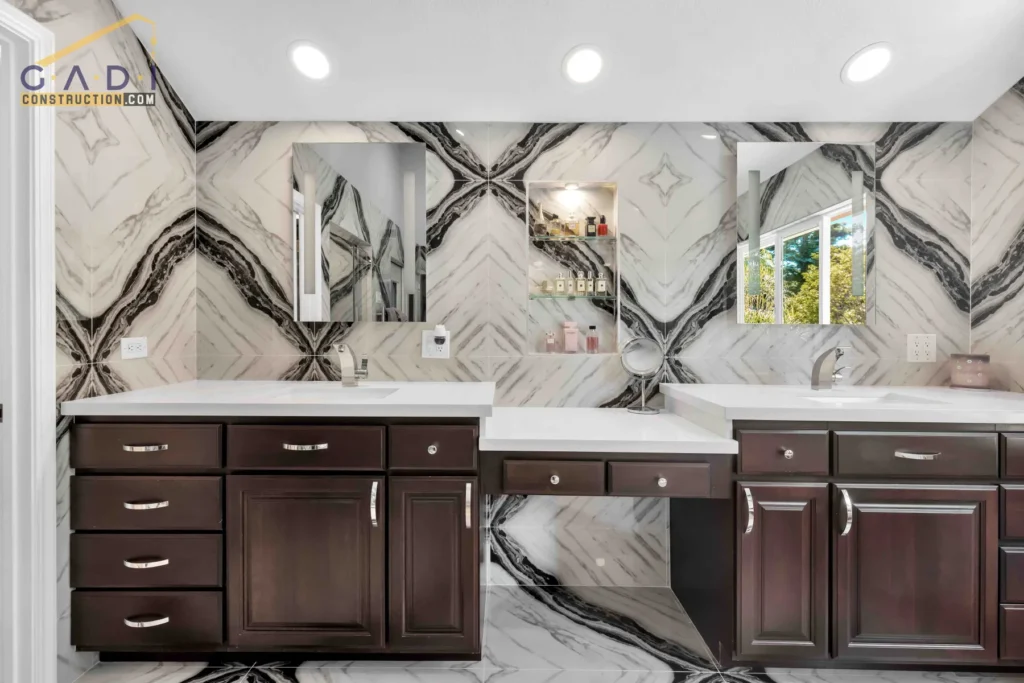
We just completed a full primary bathroom remodel with Gadi constructions and we could not be happier with the result. The quality of the work was excellent, the project was well managed, and the finished bathroom turned out beautifully and almost exactly to the vision I had in mind.
I especially want to recognize Millie, our program manager, who was exceptional from start to finish. Her enthusiasm for her work is infectious, but what impressed me most was how personally invested she became in getting every detail right. She approached the project as though she were working on her own bathroom, not a client’s. She was constantly thinking ahead, finding creative solutions, making things work when challenges came up, and never settling for “good enough.”
I traveled quite a bit during the remodel, and knowing Millie was overseeing everything gave me tremendous peace of mind. She kept the project moving, handled issues without creating unnecessary stress for me, and always made me feel that the details were in very capable hands.
Remodeling can be disruptive and stressful, but having someone who genuinely cares about the outcome makes all the difference. Millie went above and beyond in every sense, and the entire team delivered a bathroom we absolutely love. I would highly recommend them.
We just completed a full primary bathroom remodel with Gadi constructions and we could not be happier with the result. The quality of the work was excellent, the project was well managed, and the finished bathroom turned out beautifully and almost exactly to the vision I had in mind.
I especially want to recognize Millie, our program manager, who was exceptional from start to finish. Her enthusiasm for her work is infectious, but what impressed me most was how personally invested she became in getting every detail right. She approached the project as though she were working on her own bathroom, not a client's. She was constantly thinking ahead, finding creative solutions, making things work when challenges came up, and never settling for "good enough."
I traveled quite a bit during the remodel, and knowing Millie was overseeing everything gave me tremendous peace of mind. She kept the project moving, handled issues without creating unnecessary stress for me, and always made me feel that the details were in very capable hands.
Remodeling can be disruptive and stressful, but having someone who genuinely cares about the outcome makes all the difference. Millie went above and beyond in every sense, and the entire team delivered a bathroom we absolutely love. I would highly recommend GADI constructions for your next remodel project.


Gadi Construction did an outstanding job upgrading our lower bedroom and powder room- they completed a patio project for me that I am extremely happy with . I recommend Gadi Construction for their professionalism and also their customer care experience – definitely would recommend them and use them again for any future projects.

Gadi construction handled the remodel of my 2 bathrooms: the main and secondary. My project manager Eden was the reason I chose them, she was responsive and listened to what I needed. She guided me through the process and helped me choose the right materials. They were not the lowest quote but I felt I was going to get my project done on a timely schedule and completed to my liking. And we are thrilled on how they came out! Thank you Eden!

Nadav & his crew are professional, punctual and reliable. They kept us informed about the process and the next steps, timelines etc throughout the process. They can anticipate hidden issues while renovating older structures, so it minimizes the surprises during the renovations.
We had a wonderful experience working with Gadi Construction on our home remodeling project. From start to finish, the team was professional, knowledgeable, and committed to delivering high-quality work. Remodeling a home can be stressful, but they made the entire process much smoother by communicating clearly, addressing our questions promptly, and ensuring every detail was handled with care.
A special thank you to our project manager, Millie, who was truly outstanding. She was organized, responsive, and incredibly easy to work with throughout the project. Millie kept us informed at every stage, coordinated everything seamlessly, and always made sure our concerns were addressed quickly. Her attention to detail, professionalism, and dedication gave us confidence that our project was in good hands.
The craftsmanship and quality of the finished work exceeded our expectations, and we are extremely happy with the transformation of our home. We appreciate the entire Gadi Construction team for their hard work and especially Millie for making what could have been a stressful renovation an enjoyable experience.
We highly recommend Gadi Construction to anyone looking for a reliable remodeling contractor, and if you're fortunate enough to have Millie managing your project, you'll be in excellent hands.

We had a wonderful experience working with Gadi Construction on our home remodeling project. From start to finish, the team was professional, knowledgeable, and committed to delivering high-quality work. Remodeling a home can be stressful, but they made the entire process much smoother by communicating clearly, addressing our questions promptly, and ensuring every detail was handled with care.
A special thank you to our project manager, Millie, who was truly outstanding. She was organized, responsive, and incredibly easy to work with throughout the project. Millie kept us informed at every stage, coordinated everything seamlessly, and always made sure our concerns were addressed quickly. Her attention to detail, professionalism, and dedication gave us confidence that our project was in good hands.
The craftsmanship and quality of the finished work exceeded our expectations, and we are extremely happy with the transformation of our home. We appreciate the entire Gadi Construction team for their hard work and especially Millie for making what could have been a stressful renovation an enjoyable experience.
We highly recommend Gadi Construction to anyone looking for a reliable remodeling contractor, and if you're fortunate enough to have Millie managing your project, you'll be in excellent hands.
Worked very closely with Millie and team on a remodel of our 2000 sq feet property in Milpitas and it was a delight to work with Millie and the entire team. Millie took the entire burden off of our shoulders and had her team do some amazing work and a very tight schedule. The work the team has pulled off is amazing and we are extremely happy with the work and looking forward to moving back in.




People Also Ask
The 30% rule is a general guideline suggesting that homeowners should not spend more than 30% of their home's total value on a single renovation project. This is particularly relevant for major remodels, such as a kitchen or bathroom overhaul. The rule helps ensure that your investment does not over-improve the property relative to the neighborhood, which can make it difficult to recoup costs upon resale. For a balanced approach, focus on functional upgrades and quality materials that offer good return on investment. For a deeper dive into specific project planning, we recommend reading our internal article titled Remodeling Your Kitchen: What You Need To Know.
When communicating with your contractor, avoid saying things that can undermine the project or create misunderstandings. Never tell them you have a flexible budget, as this often leads to cost overruns. Avoid saying you can get materials cheaper elsewhere, as this can damage trust and lead to subpar substitutions. Do not mention that you are in a hurry or need the job done quickly, as this may compromise quality. Also, avoid making changes verbally without a written order, as this creates confusion. For more professional advice, refer to our internal article How To Work With Contractors: A Practical Guide For Homeowners. At Gadi Construction, we emphasize clear and respectful communication to ensure successful project outcomes.
A budget of $50,000 can be sufficient for a focused renovation, but it depends heavily on the scope of work and the size of your home. In the Santa Clara CA and San Jose CA area, this amount typically covers a single room remodel, such as a mid-range kitchen or bathroom update, or a few key exterior improvements like new siding or windows. It is generally not enough for a whole-house renovation, which often requires $100,000 or more due to local labor and material costs. For a successful project, prioritize essential structural or mechanical repairs before cosmetic upgrades. For comprehensive guidance on larger projects, you can read our article How To Finance Your Whole-House Remodel In Santa Clara to understand financing options and realistic budgeting for your specific needs.
A budget of $100,000 can be sufficient for a major renovation, but the scope depends heavily on the specific project and your location. In the Santa Clara CA and San Jose CA area, where labor and material costs are high, this amount typically covers a full kitchen remodel, a master bathroom overhaul, or significant updates to flooring and windows. However, a whole-house renovation often requires a larger investment. To ensure your budget is realistic, we recommend reading our internal article titled How To Finance Your Whole-House Remodel In Santa Clara. This guide provides detailed strategies for managing costs and securing funding specifically for projects in our region. Always obtain multiple bids from licensed contractors and set aside a contingency fund of 10-15 percent for unexpected issues.